Standalone authentication
This API is available only to merchants with standaloneWallet access and walletSetup scope to the config token.
Introduction
The Authentication service is responsible for issuing and managing access tokens.
Key Features:
- Provides a way to authenticate users through the login process with password, PIN, or biometric data.
- Manages biometric credentials for secure authentication.
- Refreshes access tokens using refresh tokens.
- Performs device screening for security purposes.
Prerequisites
Before integrating the Standalone Authentication service, ensure you have:
- A valid Paysafe account with appropriate permissions.
- Set up instructions for Paysafe SDK Android or iOS.
To get started, initialize the StandaloneAuthenticationService instance in your app as shown below:
- Kotlin
- Swift
import com.paysafe.wallet.android.core.wallet.Wallet

val authenticationService = Wallet.getInstance().getStandaloneAuthenticationService()
import PaysafeWallet

let authentication = Wallet.instance.standaloneAuthenticationService
Login Workflow Overview
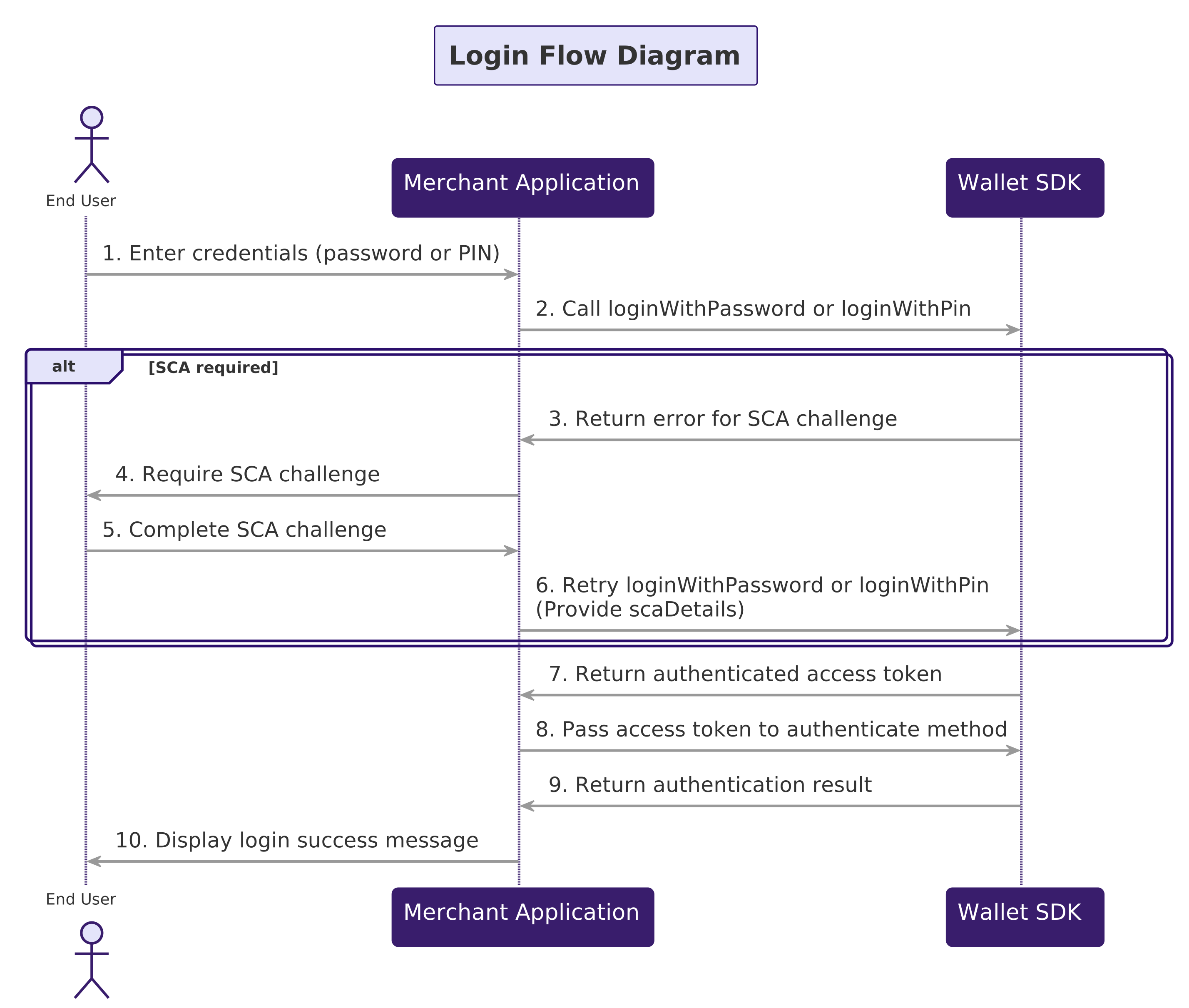
Login steps
These operations might require Strong Customer Authentication (SCA). Please read Strong Customer Authentication for more information on the process.
Step 1.
Use loginWithPassword or loginWithPin to obtain an access token and then pass it to the authenticate method of the wallet. They requires two specific parameters clientIdentifier and brandIdentity, both of which are provided by Paysafe.
Step 2.
If SCA is required, Wallet.WalletError.scaRequired / ScaRequiredException will be thrown. Follow the steps outlined in the section Handle Strong Customer Authentication (SCA) Challenges to confirm the event.
Step 3.
After the SCA event is accepted, repeat the request providing the scaDetails parameter.
Login with PIN
- Kotlin
- Swift
try {

    // Login
    val token = authentication.loginWithPin(
        clientIdentifier = "C4JTpgmp3:XqIOmHdk",
        brandIdentity = "finley",
        request = PinTokenRequest(
            username = "johnDoe123@example.com",
            pin = "111222"
        )
    )

    // Authenticate the wallet sdk
    Wallet.getInstance().authenticate(AuthenticationConfiguration(token.accessToken))

    // Your are done. Start using the wallet services
} catch (e: DataException) {
    // Handle invalid credentials error
} catch (e: ScaRequiredException) {
    // Solve Strong Customer Authentication challenge using e.authenticationEvent
    // Call loginWithPin again, providing the scaDetails parameter
}
let pinTokenRequest = Wallet.PinTokenRequest(
    username: "johnDoe123",
    pin: "111222"
)

authentication.loginWithPin(clientIdentifier: "C4JTpgmp3:XqIOmHdk",
                            brandIdentity: "finley",
                            request: pinTokenRequest,
                            completion: { loginResult in
    switch loginResult {
    case .success(let authToken):
        Wallet.instance.authenticate(with: .init(accessToken: authToken.accessToken))
    case .failure(let error):
        if case .scaRequired(let authenticationEvent, _) = error as? Wallet.WalletError {
            // Solve Strong Customer Authentication challenge using authenticationEvent
            // Call loginWithPin again, providing the scaDetails parameter
        } else {
            // Handle other errors
        }
    }
})
Login with password
- Kotlin
- Swift
A PasswordTokenRequest object.
try {

    // Login
    val token = authentication.loginWithPassword(
        clientIdentifier = "C4JTpgmp3:XqIOmHdk",
        brandIdentity = "finley",
        request = PasswordTokenRequest(
            username = "johnDoe123@example.com",
            password = "PaS#w0rd."
        )
    )

    // Authenticate the wallet sdk
    Wallet.getInstance().authenticate(AuthenticationConfiguration(token.accessToken))

    // Your are done. Start using the wallet services
} catch (e: DataException) {
    // Handle invalid credentials error
} catch (e: ScaRequiredException) {
    // Solve Strong Customer Authentication challenge using e.authenticationEvent
    // Call loginWithPassword again, providing the scaDetails parameter
}
A PasswordTokenRequest object.
let passwordTokenRequest = Wallet.PasswordTokenRequest(
    username: "johnDoe123",
    password: "Pa$$w0rd."
)

authentication.loginWithPassword(clientIdentifier: "C4JTpgmp3:XqIOmHdk",
                                 brandIdentity: "finley",
                                 request: passwordTokenRequest,
                                 completion: { loginResult in
    switch loginResult {
    case .success(let authToken):
        Wallet.instance.authenticate(with: .init(accessToken: authToken.accessToken))
    case .failure(let error):
        if case .scaRequired(let authenticationEvent, _) = error as? Wallet.WalletError {
            // Solve Strong Customer Authentication challenge using authenticationEvent
            // Call loginWithPassword again, providing the scaDetails parameter
        } else {
            // Handle other errors
        }
    }
})
Login with biometric
- Kotlin
- Swift
try {

    // Login
    val token = authentication.loginWithBiometric(
        clientIdentifier = "C4JTpgmp3:XqIOmHdk",
        brandIdentity = "finley",
        request = BiometricTokenRequest(
            username = "johnDoe123@example.com",
            biometricData = "biometric_data_string"
        )
    )

    // Authenticate the wallet sdk
    Wallet.getInstance().authenticate(AuthenticationConfiguration(token.accessToken))

    // Your are done. Start using the wallet services
} catch (e: DataException) {
    // Handle invalid credentials error
} catch (e: ScaRequiredException) {
    // Solve Strong Customer Authentication challenge using e.authenticationEvent
    // Call loginWithBiometric again, providing the scaDetails parameter
}
let biometricTokenRequest = Wallet.BiometricTokenRequest(
    username: "johnDoe123",
    biometricData: "biometric_data_string"
)

authentication.loginWithBiometric(clientIdentifier: "C4JTpgmp3:XqIOmHdk",
                                  brandIdentity: "finley",
                                  request: biometricTokenRequest,
                                  completion: { loginResult in
    switch loginResult {
    case .success(let authToken):
        Wallet.instance.authenticate(with: .init(accessToken: authToken.accessToken))
    case .failure(let error):
        if case .scaRequired(let authenticationEvent, _) = error as? Wallet.WalletError {
            // Solve Strong Customer Authentication challenge using authenticationEvent
            // Call loginWithBiometric again, providing the scaDetails parameter
        } else {
            // Handle other errors
        }
    }
})
Biometric Credential Management
The StandaloneAuthenticationService provides methods to manage biometric credentials for secure authentication.
Get biometric credential status
Check the status of biometric credentials for the current device:
- Kotlin
- Swift
try {
    val status = authentication.getBiometricCredentialStatus()
    // Handle status: AVAILABLE, UNAVAILABLE, or ENROLLED
} catch (e: Exception) {
    // Handle error
}
authentication.getBiometricCredentialStatus(completion: { result in
    switch result {
    case .success(let status):
        // Handle status: .available, .unavailable, or .enrolled
    case .failure(let error):
        // Handle error
    }
})
Create biometric credential
Generate a new biometric credential for the current device:
- Kotlin
- Swift
try {
    val credential = authentication.createBiometricCredential()
    // Handle credential.value for future authentication
} catch (e: ScaRequiredException) {
    // Solve Strong Customer Authentication challenge using e.authenticationEvent
    // Call createBiometricCredential again, providing the scaDetails parameter
} catch (e: Exception) {
    // Handle other errors
}
authentication.createBiometricCredential(completion: { result in
    switch result {
    case .success(let credential):
        // Handle credential.value for future authentication
    case .failure(let error):
        if case .scaRequired(let authenticationEvent, _) = error as? Wallet.WalletError {
            // Solve Strong Customer Authentication challenge using authenticationEvent
            // Call createBiometricCredential again, providing the scaDetails parameter
        } else {
            // Handle other errors
        }
    }
})
Delete biometric credential
Remove an existing biometric credential from the current device:
- Kotlin
- Swift
try {
    val response = authentication.deleteBiometricCredential()
    // Handle response.isSuccess
} catch (e: ScaRequiredException) {
    // Solve Strong Customer Authentication challenge using e.authenticationEvent
    // Call deleteBiometricCredential again, providing the scaDetails parameter
} catch (e: Exception) {
    // Handle other errors
}
authentication.deleteBiometricCredential(completion: { result in
    switch result {
    case .success:
        // Biometric credential successfully deleted
    case .failure(let error):
        if case .scaRequired(let authenticationEvent, _) = error as? Wallet.WalletError {
            // Solve Strong Customer Authentication challenge using authenticationEvent
            // Call deleteBiometricCredential again, providing the scaDetails parameter
        } else {
            // Handle other errors
        }
    }
})
Token Management
Refresh access token
Obtain a new access token using a refresh token from previous authentication:
- Kotlin
- Swift
try {
    val newToken = authentication.refreshToken(
        clientIdentifier = "C4JTpgmp3:XqIOmHdk",
        brandIdentity = "finley",
        request = RefreshTokenRequest(
            refreshToken = "your_refresh_token_here"
        )
    )

    // Authenticate the wallet sdk with the new token
    Wallet.getInstance().authenticate(AuthenticationConfiguration(newToken.accessToken))

    // Continue using the wallet services
} catch (e: Exception) {
    // Handle error - may need to re-authenticate with credentials
}
let refreshTokenRequest = Wallet.RefreshTokenRequest(
    refreshToken: "your_refresh_token_here"
)

authentication.refreshToken(clientIdentifier: "C4JTpgmp3:XqIOmHdk",
                            brandIdentity: "finley",
                            request: refreshTokenRequest,
                            completion: { result in
    switch result {
    case .success(let newToken):
        // Authenticate the wallet sdk with the new token
        Wallet.instance.authenticate(with: .init(accessToken: newToken.accessToken))
        // Continue using the wallet services
    case .failure(let error):
        // Handle error - may need to re-authenticate with credentials
    }
})
Device Screening
Get device screening
Perform device screening to generate a unique digital fingerprint:
- Kotlin
- Swift
try {
    val screeningResult = authentication.getDeviceScreening(forceRefresh = false)
    // Handle screeningResult.digitalFingerprint
} catch (e: Exception) {
    // Handle error
}
authentication.getDeviceScreening(forceRefresh: false, completion: { result in
    switch result {
    case .success(let screeningResult):
        // Handle screeningResult.digitalFingerprint
    case .failure(let error):
        // Handle error
    }
})